


Command Vs Demand
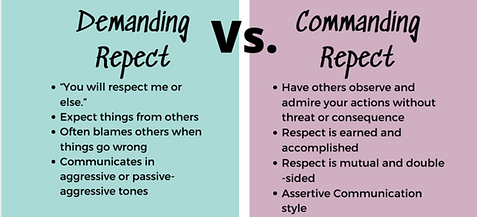
Respect is something that everyone wants, but it’s not always easy to earn. To command respect, a person needs to show confidence in themselves and their abilities. This means being assertive without being rude. It’s also important to treat others with kindness and fairness because when you show respect to others, they are more likely to return it. Finally, being consistent in your actions and words builds trust, which is a key part of earning respect from those around you.
People who command respect often lead by example, showing kindness, integrity, and confidence, which makes others naturally look up to them. On the other hand, demanding respect is more about insisting that others show you respect, often through authority or fear. This can happen when someone uses their position, like a boss or a parent, to make others comply without fostering a genuine connection. While demanding respect might get immediate compliance, it often leads to resentment and a lack of true admiration, whereas commanding respect builds lasting relationships and a positive atmosphere.
In situations where treatment is unacceptable or you are shown disrespect, it's better to ignore or walk away. Demanding or trying to convince someone undermines your own authority over yourself and adds fuel if someone's intent is to get a rise out of you.
A quote I came across from Dr. Christian Conte:
“To demand respect is to tell others, “You will respect me!” or otherwise threaten or punish those who do not act according to your wishes. To command respect is to have others observe and admire your actions of their own volition.”


Comments